The Digital Walters is a branch of The Walters Art Museum Manuscripts Department.

This late fifteenth-century manuscript, written on paper, contains a compilation of alchemical texts assembled and copied by Arnold of Brussels. For the most part, it was made in Naples between 1472 and 1490, as often noted at the end of works (for example, fols. 149r, 182v, 196v). A group of works in the middle of the volume appear to be in a different, possibly German, hand (fols. 79-101). As well as lists of philosophers, recipes, and key alchemical terms, it contains a number of texts and treatises of historical importance. These include the pseudo-Albertus Magnus's "Semita Recta" ("The Straight Path," fols. 17v-18r) and Hermes Trismegistus's "Obra de la Alkimia" ("The Work of Alchemy," ff. 30v-32v), as well as multiple works or excerpts of works by Jābir ibn Ḥayyān (known as Geber), Ramon Llull, Arnold of Villanova, and Pliny the Elder among others. For more information, see Hirsh (1970). The text is simply adorned with colored initials and paraph markers, but has been further embellished by later readers with simple line-fillers, a large number of manicules, and – perhaps most interestingly – sketches of alchemical apparatus (fols. 19v-20r). Later hands have made annotations and additions to the text throughout. There are multiple conflicting systems of foliation, and the quires appear to have been reordered at least once before being bound in their current order. Some of the leaves are damaged and many have had their margins repaired. Others are almost completely detached from the text block (for example, fol. 94).
Support: Paper; Extent: iv+229+iv; 285 x 204 mm bound to 295 x 222 mm; Foliation: Modern foliation in pencil, upper right recto, lower right recto; i-xiv (title page and table of contents), 1-216; Collation: 1 (1, +1), 2 (12), 3-6 (16), 7 (14), 8-9 (12), 10 (5, +3), 11 (6), 12 (5, +3), 13 (10), 14-15 (16), 16 (14), 17 (12), 18 (2), 19-20 (8), 21 (12); Signatures: Modern quire signatures in pencil, a-u (fols. iir, 17r, 33r, 49r, 65r, 79r, 91r, 103r, 108r, 114r, 119r, 129r, 145r, 161r, 175r, 187r, 189r, 197r, 205r)
Two columns of forty-one lines; evidence of trimming; written area: 211 x 145 mm
Gothic--cursiva
One large diagram (fol. 163r) on the philosopher's stone; occasional marginal drawings (for example, alchemical apparatus, fols. 19v-20r); line-fillers and manicules in ink; rubrication and paragraph marks in red
For a full list of Decorations in this manuscript please see the Content and Decorations section by clicking on the [i] button in the top left corner of the image viewer above.
Holes in and damage to paper throughout
These are pages that we pulled aside that disrupted the flow of the manuscript reader. These may be bindings, inserts, bookmarks, and various other oddities.

Naples, Italy
Second half 15th century
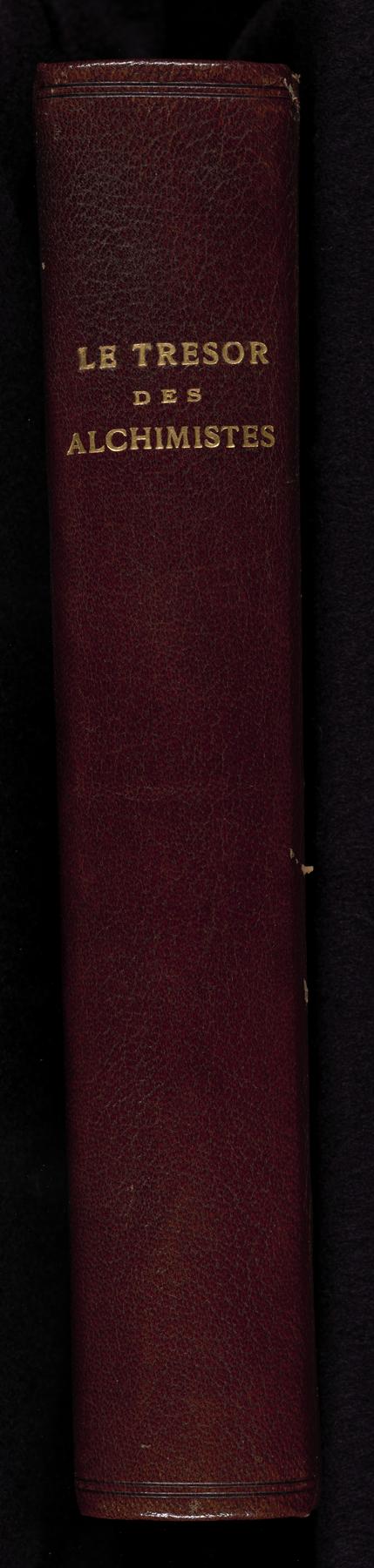
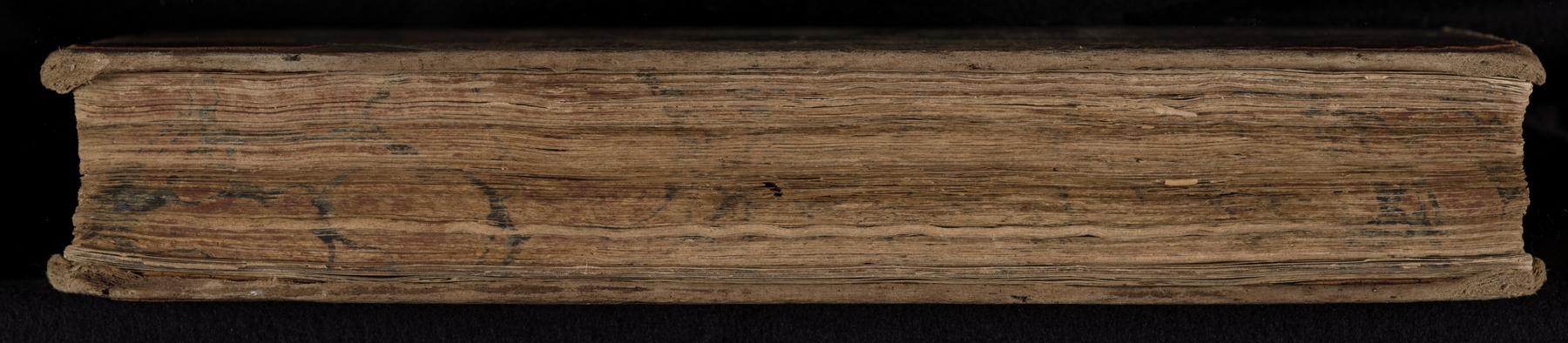
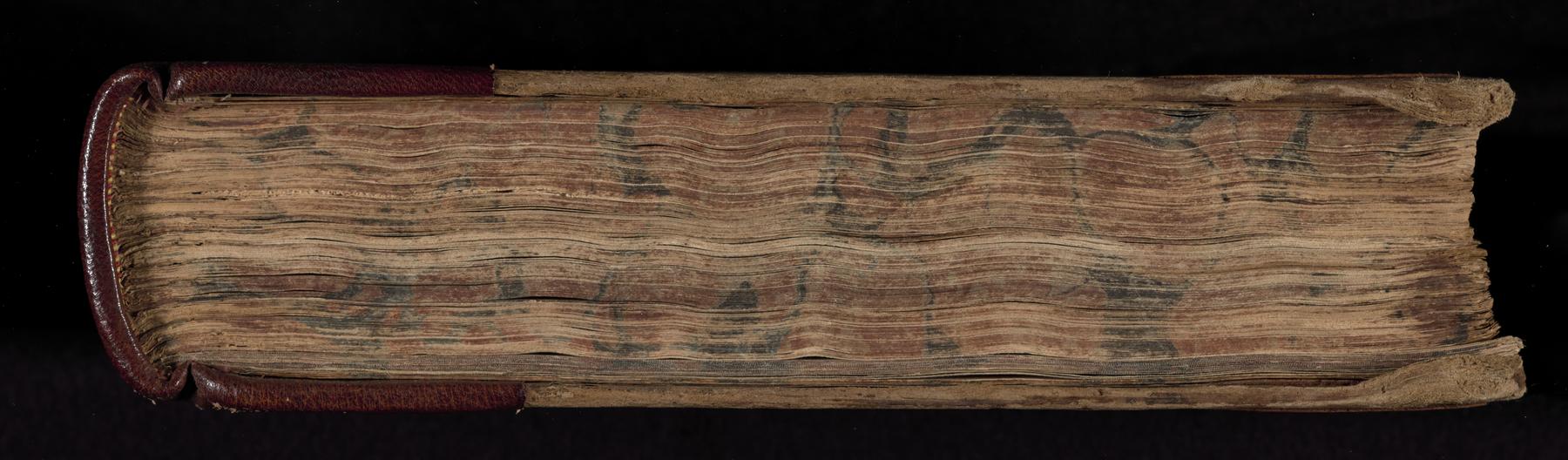
Half leather; rebacked, title stamped in gold on spine: "LE TRESOR DES ALCHEMISTES"; marbled edges
Latin; Italian; Catalan, Valencian
W. E. Whitman in pencil on front flyleaf and in ink on second title page (nineteenth century); acquired by Lehigh University in 1881
Naples, Italy
Second half 15th century
Latin; Italian; Catalan, Valencian
W. E. Whitman in pencil on front flyleaf and in ink on second title page
This late fifteenth-century manuscript, written on paper, contains a compilation of alchemical texts assembled and copied by Arnold of Brussels. For the most part, it was made in Naples between 1472 and 1490, as often noted at the end of works (for example, fols. 149r, 182v, 196v). A group of works in the middle of the volume appear to be in a different, possibly German, hand (fols. 79-101). As well as lists of philosophers, recipes, and key alchemical terms, it contains a number of texts and treatises of historical importance. These include the pseudo-Albertus Magnus's "Semita Recta" ("The Straight Path," fols. 17v-18r) and Hermes Trismegistus's "Obra de la Alkimia" ("The Work of Alchemy," ff. 30v-32v), as well as multiple works or excerpts of works by Jābir ibn Ḥayyān (known as Geber), Ramon Llull, Arnold of Villanova, and Pliny the Elder among others. For more information, see Hirsh (1970). The text is simply adorned with colored initials and paraph markers, but has been further embellished by later readers with simple line-fillers, a large number of manicules, and – perhaps most interestingly – sketches of alchemical apparatus (fols. 19v-20r). Later hands have made annotations and additions to the text throughout. There are multiple conflicting systems of foliation, and the quires appear to have been reordered at least once before being bound in their current order. Some of the leaves are damaged and many have had their margins repaired. Others are almost completely detached from the text block (for example, fol. 94).
Holes in and damage to paper throughout
Gothic--cursiva
One large diagram (fol. 163r) on the philosopher's stone; occasional marginal drawings (for example, alchemical apparatus, fols. 19v-20r); line-fillers and manicules in ink; rubrication and paragraph marks in red
For a full list of Decorations in this manuscript please see the Content and Decorations section by clicking on the [i] button in the top left corner of the image viewer above.
These are pages that we pulled aside that disrupted the flow of the manuscript reader. These may be bindings, inserts, bookmarks, and various other oddities.
Clear All