The Digital Walters is a branch of The Walters Art Museum Manuscripts Department.

This noted Dominican Missal, likely produced in Paris, contains thirteen historiated initials by the Johannes Grusch workshop. A series of prayers for Charles I, King of Sicily (r. 1265-1285) and his family indicate an early Southern Italian or Sicilian ownership.
Support: Parchment; Extent: iii+434+i; 200 x 130 mm bound to 210 x 146 mm; Foliation: Early (perhaps original) foliation in red ink, top left verso; modern foliation in pencil, upper right recto (references in this record are to modern foliation in pencil); Collation: 1 (6), 2 (8), 3 (8, -1), 4-5 (10), 6 (12), 7-11 (10), 12 (12), 13-31 (8), 32 (6, -1), 33 (12), 34-43 (8), 44 (9, +1), 45 (6, -1), 46-52 (8)
Two columns of thirty lines, lead point ruling; four-line red musical staves with square notation throughout; thirteen historiated initials with short marginal extensions; seventeen decorated initials with interlaced strap design; penwork initials in red and blue with long marginal extensions throughout; written area: 136 x 88 mm
Gothic--textualis
Thirteen historiated initials by the Johannes Grusch workshop: David before the Lord (fol. 24r), Nativity (fol. 42r), Crucifixion (fol. 183r), Resurrection (fol. 186r), Ascension (fol. 208v), Pentecost (fol. 216r), Holy Trinity (fol. 227r), Dedication of the Church (fol. 269v), Saint Andrew being nailed to the cross (fol. 273r), Annunciation (fol. 293v), Dormition of the Virgin (fol. 329v), Nativity of the Virgin (fol. 334v), and All Saints (fol. 347r)
For a full list of Decorations in this manuscript please see the Content and Decorations section by clicking on the [i] button in the top left corner of the image viewer above.
The liturgy of the missal follows the Dominican liturgy established by Humbert of Romans, Master General of the Dominican Order (1254-1263); text bears resemblance to London, British Library, Add. Ms. 23935; several entries in calendar suggest Dominican usage, including Saint Thomas Aquinas [January 28 (translation) and March 7], Peter Martyr [April 29], Dominic [May 24 (translation), and August 5), and anniversary of Dominican Order [September 5]; suggesting continued Dominican use are prayers added in the fourteenth century to Saint Louis of Toulouse (fol. 433v)
Although Robert Branner ("The Johannes Grusch Atelier and the Continental Origins of the William of Devon Painter," Art Bulletin 54, 1 [1972], p. 30; idem., Manuscript Painting in Paris During the Reign of Saint Louis: A Study of Styles [Berkeley: University of California Press, 1977], p. 82) dated the manuscript to 1262-1265 on stylistic grounds, there are no internal elements that confirm this dating
An abbreviated liturgy for the Feast of Corpus Christi is inscribed in the lower margin of fol. 229r in an early-fourteenth-century Italian hand
These are pages that we pulled aside that disrupted the flow of the manuscript reader. These may be bindings, inserts, bookmarks, and various other oddities.


France, Paris
Circa 1275
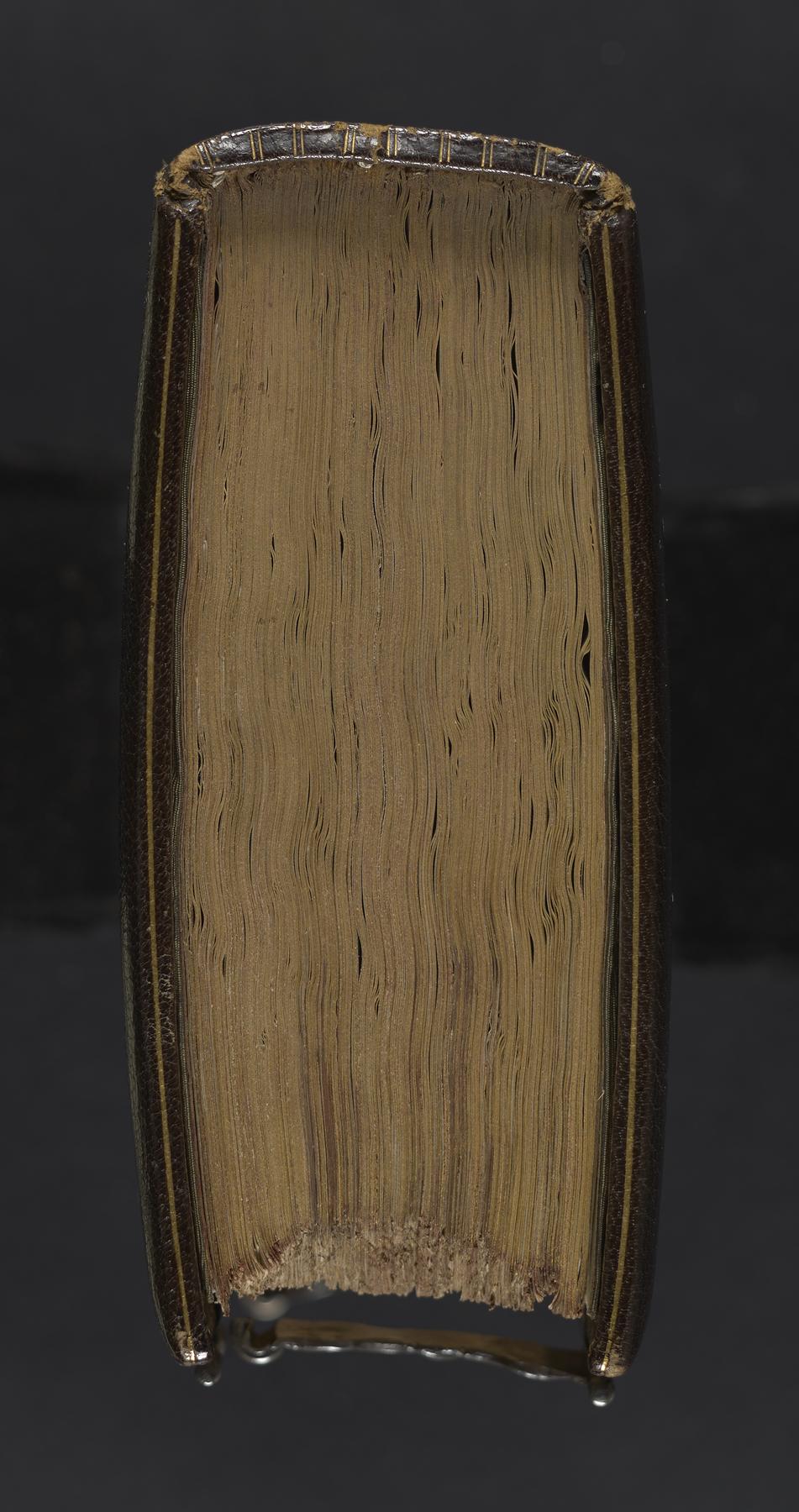
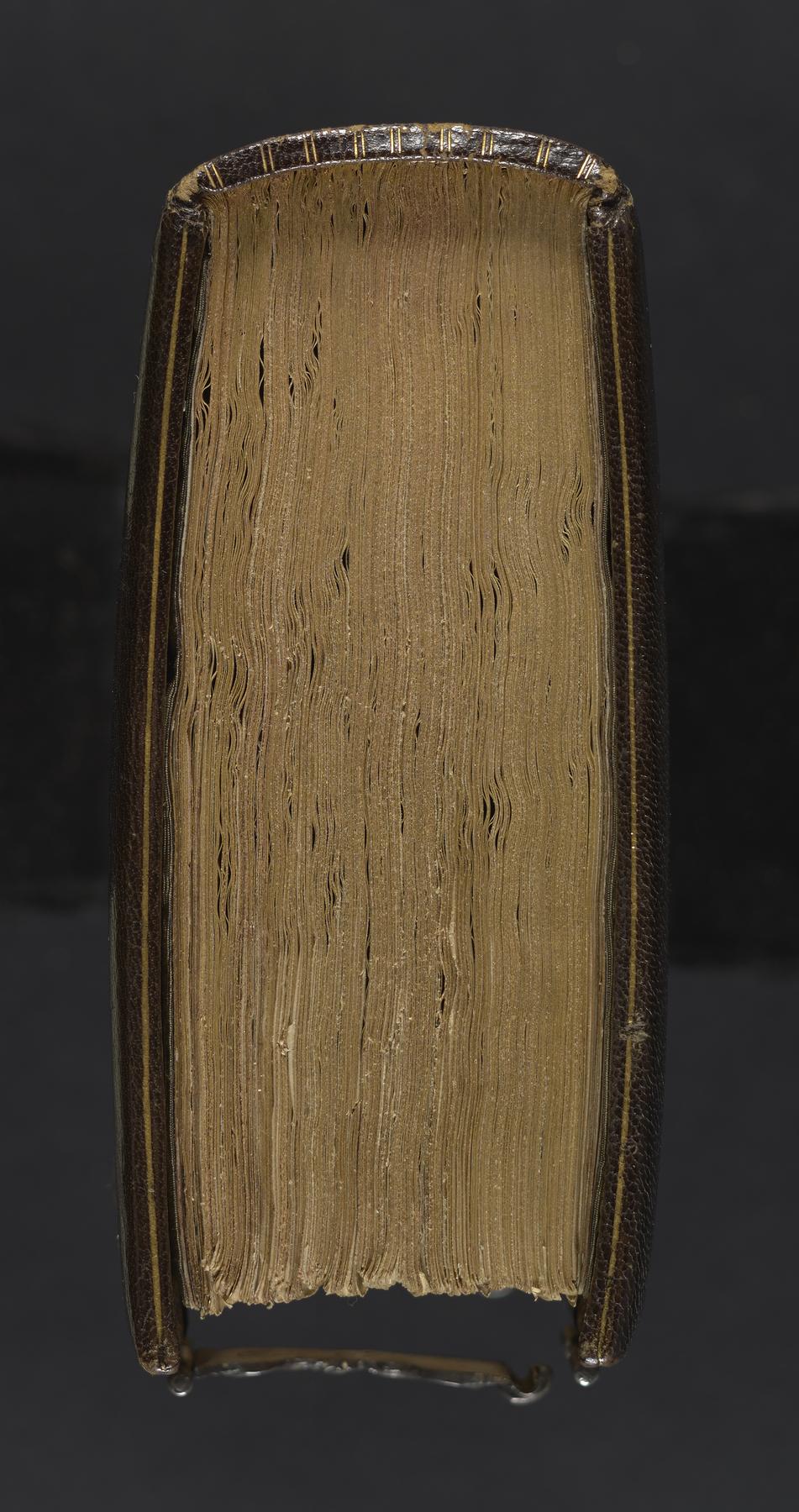
Brown levant morocco, gilt frame sides, gilt edges, chased clasps, by Kerr and Richardson of Glasgow, lower clasp inscribed with initials A.J., inscribed in gold on spine: "Missal. Ordinis fratrum praedicatorum s. dominici. Secolo xiii."; nineteenth century
Latin
Italy (Sicily?), late thirteenth-seventeenth centuries; John Frederick Lewis, Philadelphia; given by his widow, Anne Baker Lewis, to the Free Library of Philadelphia in 1936; Two identical prayers in the margins indicate an early Italian provenance and provide a terminus ante quem date for production; inscriptions in lower margins of fols. 183r (partially erased) and 184r in contemporary Italian rotunda are a repeated prayer for Charles I, King of Sicily (r. 1265-1285), and for his wife, children, parents and deceased friends: "Ora p[ro] d[omi]no karolo p[rim]o rege sicilie et d[omi]na beatrice ux[ore] eor[um]que lib[er]is p[ar]entib[us] et amicis defunctis;" all the children of Charles and his wife Beatrice had died by 1309, dating the inscriptions to after this period; prayers and additions to calendar, in fifteenth and seventeenth centuries, by Italian scribes
France, Paris
Circa 1275
Latin
Italy , and for his wife, children, parents and deceased friends: "Ora p[ro] d[omi]no karolo p[rim]o rege sicilie et d[omi]na beatrice ux[ore] eor[um]que lib[er]is p[ar]entib[us] et amicis defunctis;" all the children of Charles and his wife Beatrice had died by 1309, dating the inscriptions to after this period; prayers and additions to calendar, in fifteenth and seventeenth centuries, by Italian scribes (provenance)
This noted Dominican Missal, likely produced in Paris, contains thirteen historiated initials by the Johannes Grusch workshop. A series of prayers for Charles I, King of Sicily (r. 1265-1285) and his family indicate an early Southern Italian or Sicilian ownership.
The liturgy of the missal follows the Dominican liturgy established by Humbert of Romans, Master General of the Dominican Order (1254-1263); text bears resemblance to London, British Library, Add. Ms. 23935; several entries in calendar suggest Dominican usage, including Saint Thomas Aquinas [January 28 (translation) and March 7], Peter Martyr [April 29], Dominic [May 24 (translation), and August 5), and anniversary of Dominican Order [September 5]; suggesting continued Dominican use are prayers added in the fourteenth century to Saint Louis of Toulouse (fol. 433v)
Although Robert Branner ("The Johannes Grusch Atelier and the Continental Origins of the William of Devon Painter," Art Bulletin 54, 1 [1972], p. 30; idem., Manuscript Painting in Paris During the Reign of Saint Louis: A Study of Styles [Berkeley: University of California Press, 1977], p. 82) dated the manuscript to 1262-1265 on stylistic grounds, there are no internal elements that confirm this dating
An abbreviated liturgy for the Feast of Corpus Christi is inscribed in the lower margin of fol. 229r in an early-fourteenth-century Italian hand
Gothic--textualis
Thirteen historiated initials by the Johannes Grusch workshop: David before the Lord (fol. 24r), Nativity (fol. 42r), Crucifixion (fol. 183r), Resurrection (fol. 186r), Ascension (fol. 208v), Pentecost (fol. 216r), Holy Trinity (fol. 227r), Dedication of the Church (fol. 269v), Saint Andrew being nailed to the cross (fol. 273r), Annunciation (fol. 293v), Dormition of the Virgin (fol. 329v), Nativity of the Virgin (fol. 334v), and All Saints (fol. 347r)
For a full list of Decorations in this manuscript please see the Content and Decorations section by clicking on the [i] button in the top left corner of the image viewer above.
These are pages that we pulled aside that disrupted the flow of the manuscript reader. These may be bindings, inserts, bookmarks, and various other oddities.
Clear All